

Asking a generic AI
- No alignment scoring, just name-drops
- No behavioral implications
- No contradictions surfaced
- No causal chain (belief → behavior → outcomes)
- No signals you can actually track
Type what you believe — see who in the canon agrees and what it actually commits you to.
Or start with one of these
Wisdom from 35+ legends


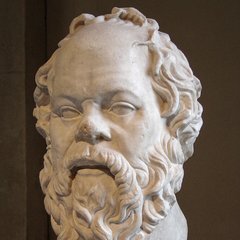
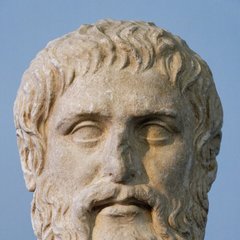
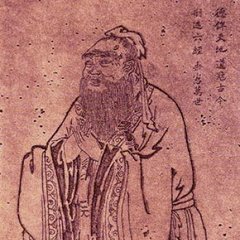
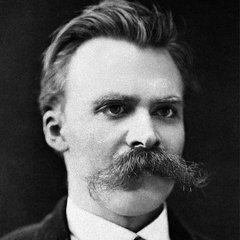
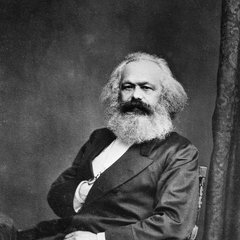
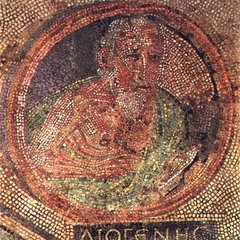
Socrates, Plato, Confucius, Marcus Aurelius, Nietzsche, Marx, and 30+ more. Every belief gets mapped against the strongest versions of who agrees, who pushes back, and who'd call it confused.
Real worldviews from real beliefs
Popular right now
Why structured?
Asking a generic AI
A Wellow worldview
Socrates
Strongly alignsWhy · The unexamined life can't sustain love — knowing yourself is prerequisite to recognizing another.
Aristotle
Partially alignsWhy · Philia requires honest self-assessment, but love is also about the friend's virtues — not only your own clarity.
Jean-Paul Sartre
OpposesWhy · Love is encountering the Other's freedom — the self alone can't deliver it.
Behavioral exposure · Relationships
You’d choose partners who challenge your self-account over those who flatter it — and leave when the mirror gets too comfortable.
Example output for “I think love is mostly about knowing yourself.” Real worldviews include 3–6 alignment cards, behavioral exposure across four surfaces, contradictions, and signals to watch.
Asking a generic AI
A Wellow worldview
Socrates
Strongly alignsWhy · The unexamined life can't sustain love — knowing yourself is prerequisite to recognizing another.
Aristotle
Partially alignsWhy · Philia requires honest self-assessment, but love is also about the friend's virtues — not only your own clarity.
Jean-Paul Sartre
OpposesWhy · Love is encountering the Other's freedom — the self alone can't deliver it.
Behavioral exposure · Relationships
You’d choose partners who challenge your self-account over those who flatter it — and leave when the mirror gets too comfortable.
Example output for “I think love is mostly about knowing yourself.” Real worldviews include 3–6 alignment cards, behavioral exposure across four surfaces, contradictions, and signals to watch.
How it works
Start with a conviction about how to live, what to value, what to choose.
Get a structured worldview: who shares it, who challenges it, where it commits you behaviorally.
Read-only worldview page you can revisit when the belief gets tested.
Refined worldview
One sharp restatement of your belief as a precise philosophical claim. No hedging.
Philosopher alignment
Strong, partial, and opposed thinkers from a 35-name canon — including the strongest counterargument.
Behavioral exposure
What this belief commits you to across career, financial, lifestyle, and relationship decisions.
Causal chain
First-order behavior this week, second-order patterns, third-order who you become.
Contradictions
Where you say this but live the opposite — surfaced in second person.
Signals to watch
Self-trackable, falsifiable behaviors that show whether you're actually living the belief.
Questions
No. It doesn't classify you. You hand it a single belief and it shows what that belief tends to commit you to behaviorally, who in the philosophical canon shares or challenges it, and where it tends to break down.
A hand-curated set of 35 thinkers spanning ancient, modern, and contemporary traditions, each placed across six values axes (individualism, structure, stability, rationality, meaning, risk). At this size the editorial signal stays interpretable and beats embedding-based retrieval.
Most beliefs partially fit multiple traditions, so disagreement is expected. Use the alignment as a thinking tool, not a verdict. The opposed philosophers are usually the most valuable: they're the strongest version of the counterargument.
No. It tells you what your belief tends to commit you to: the behaviors it's likely to push you toward, the contradictions it carries, and the signals to watch. The decision is still yours.
Generated worldviews are stored for 90 days as unlisted read-only share links. They're not indexed, not searchable, and not visible to other users unless you share the URL. Nothing is sold, advertised against, or used to train a model.